


Fluorite is calcium fluoride (CaF2) and one of the most collected minerals in the world. Collectors love fluorite because it forms sharp cubes and octahedra, comes in almost every colour of the rainbow and often glows under UV light. This fluorite collector's guide explains colours, crystal forms, fluorescence, the best localities and what a good specimen is worth.
Fluorite quick facts
| Chemical formula | CaF2 (calcium fluoride) |
|---|---|
| Crystal system | Isometric (cubic) |
| Mohs hardness | 4 (the reference mineral for 4 on the Mohs scale) |
| Specific gravity | about 3.18 |
| Cleavage | Perfect octahedral, in four directions |
| Lustre | Vitreous (glassy) |
| Colours | Colourless, purple, green, blue, yellow, pink, brown, often zoned |
| Fluorescence | Often blue to violet under UV light; some specimens show no reaction |
| Classic localities | China, Mexico, England, Spain, Morocco, USA and Italy |
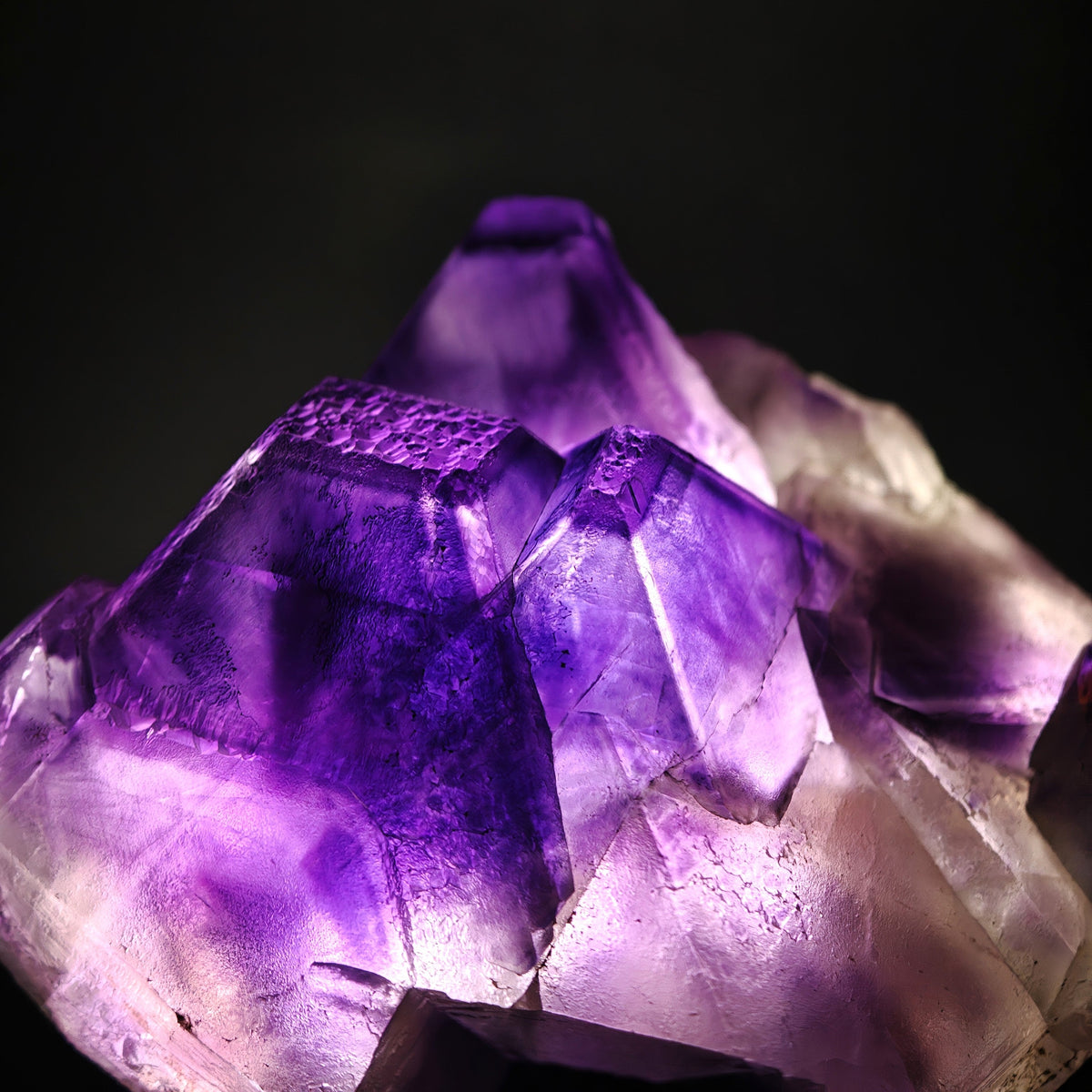
What is fluorite?
Fluorite is a halide mineral made of calcium and fluorine. It grows mainly in hydrothermal veins, where hot fluids deposit it together with quartz, calcite, baryte, galena and sphalerite. Large deposits are mined as "fluorspar" for the chemical and steel industries, and the best crystals from those mines end up in collections.
The name has an Italian story. It was given in 1797 by the mineralogist Carlo Antonio Galeani Napione, from the Latin fluere, "to flow", because fluorite was added to furnaces as a flux to help ores melt.
Why does fluorite come in so many colours?
Pure fluorite is colourless. The colours come from tiny amounts of other elements, mostly rare earths such as yttrium, europium and samarium, and from "colour centres": defects in the crystal structure created by natural radiation over millions of years. The same crystal can grow through several fluid pulses, so many fluorites show colour bands, phantoms and a different colour at the edges.
- Purple and violet are the classic fluorite colours, from China, Mexico, Morocco and Sardinia.
- Green is typical of Xianghualing (China) and of many English mines.
- Yellow and golden crystals come from Asturias (Spain), El Hammam (Morocco) and Beijing (China).
- Blue is rarer; New Mexico (USA) and some English mines are known sources.
- Pink octahedra come mainly from Alpine fissures and from Pakistan.
Some colours are sensitive to light: certain fluorites slowly fade if left for months in direct sunlight. It is a good reason to display them away from windows.
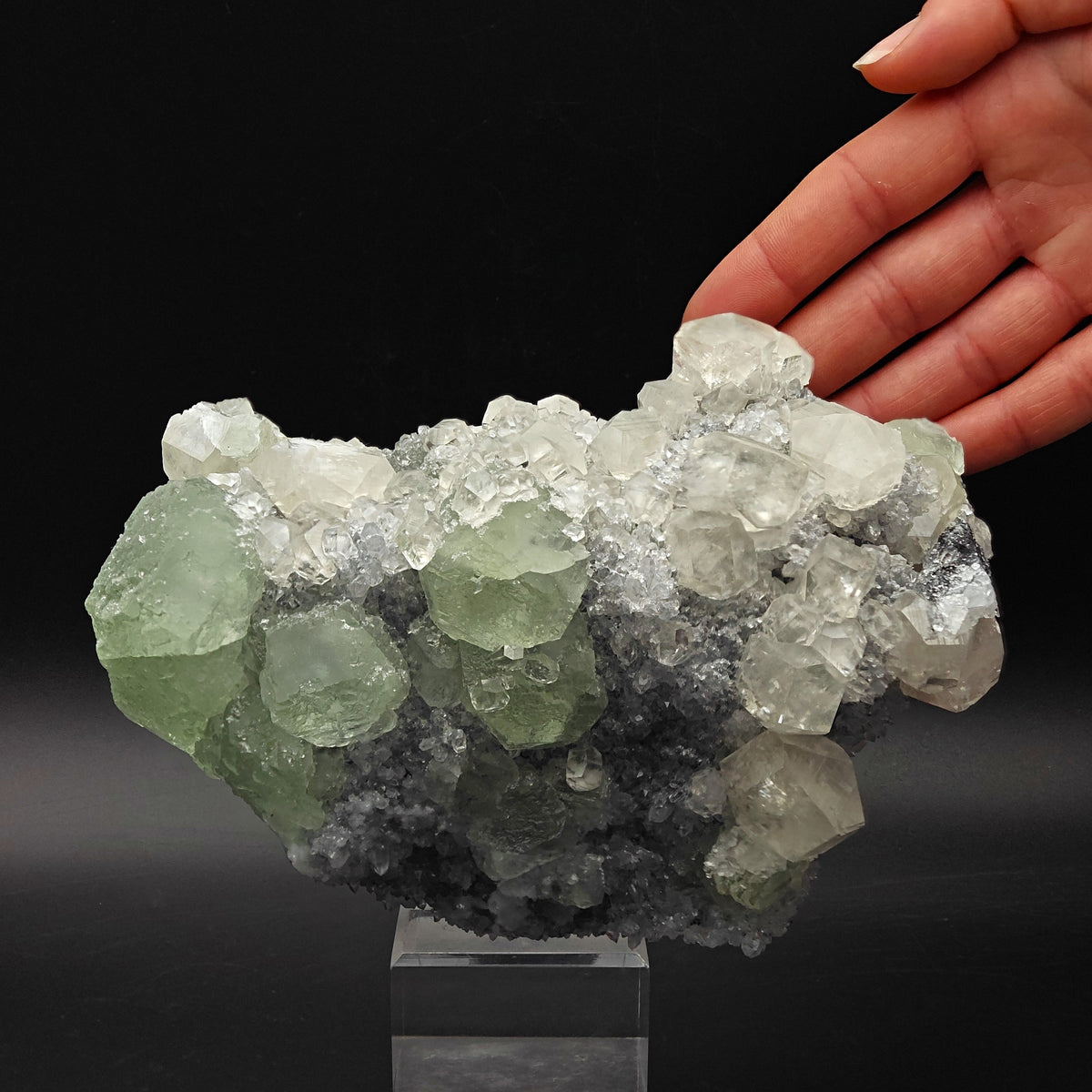
Fluorite crystal shapes: cubes, octahedra and more
Fluorite is cubic, and its most common shape is the cube. Under different conditions it also grows as octahedra (eight triangular faces), as cuboctahedra that combine both forms, and as rounded or stepped aggregates.
- Cubes: Spain, Morocco, Illinois, Coahuila (Mexico) and Sardinia.
- Octahedra: Hexigten Banner (China) and the Navidad Mine in Durango (Mexico).
- Interpenetrant twins: two cubes that grow through each other, a speciality of Weardale in England.
- Spherical and stepped forms: from Zhejiang (China) and El Hammam (Morocco).
Because of its perfect octahedral cleavage, a cube can split along its corners into a clean octahedron. Many polished "octahedra" sold in shops are made this way; natural octahedral crystals have bright, flat faces that grew on their own.
Fluorite and fluorescence
Fluorite gave its name to fluorescence. In 1852 the physicist George Gabriel Stokes studied the light emitted by fluorite under ultraviolet light and called the effect "fluorescence".
The most common reaction is blue to violet, caused by divalent europium replacing calcium in the crystal. Yellowish or creamy glows are often due to organic impurities. Some English fluorites from Weardale are so reactive that they glow even in strong daylight. Not every fluorite reacts, so a UV photo is the best way to know what a specific piece does.
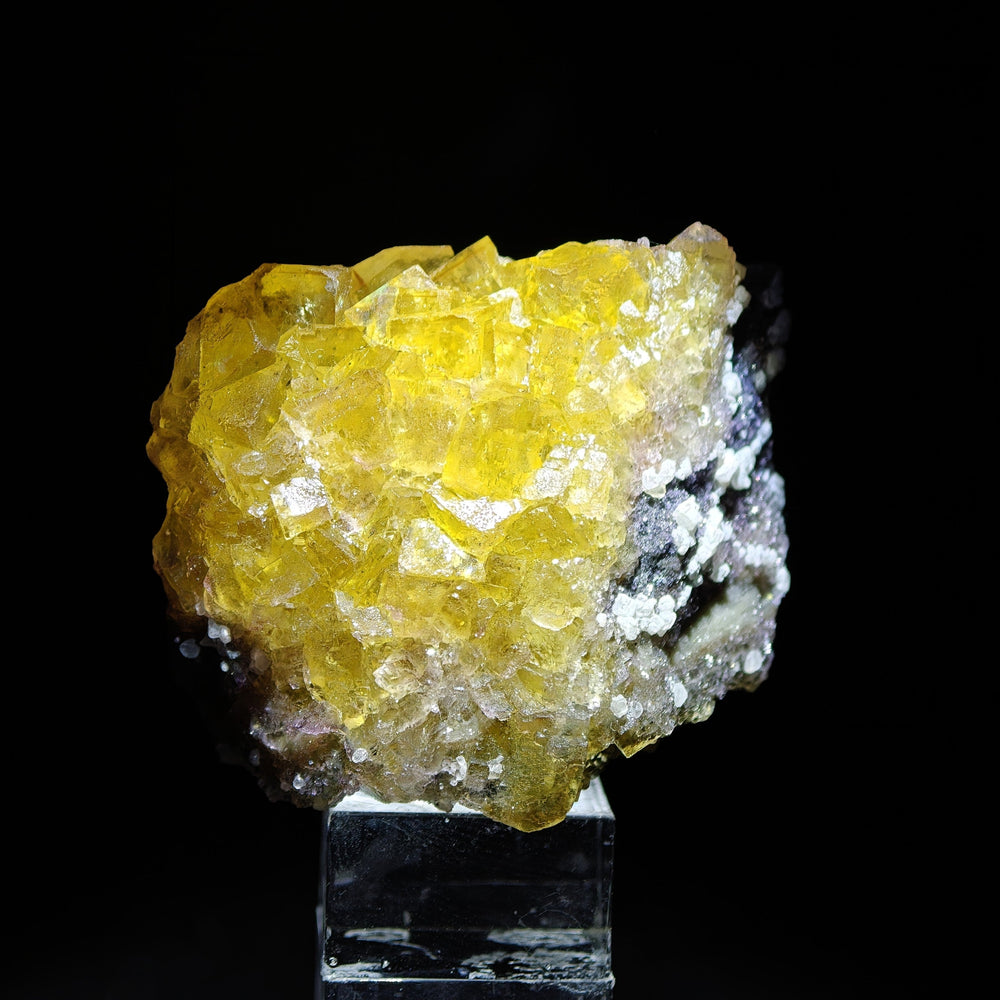
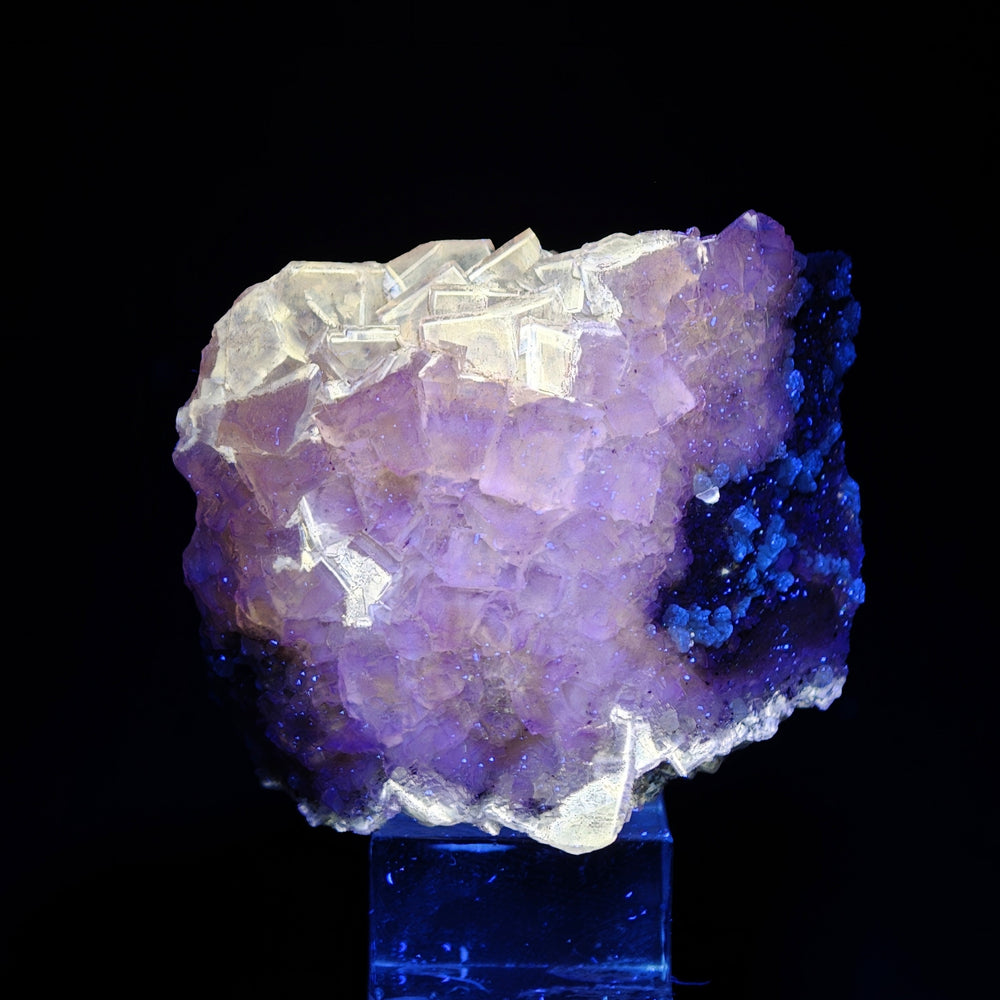
Golden fluorite cubes from the Moscona Mine, Asturias, Spain: the same specimen in daylight and under UV light.
All the fluorescent specimens in our shop are photographed under UV light as well. You can browse them in our fluorescent minerals collection.
Where is fluorite found? The best localities
China
Since the 1990s China has produced many of the finest fluorites on the market. Hunan is the key province, with mines such as Xianghualing, Yaogangxian and Shangbao, famous for green, purple and colourless crystals with clouds and phantoms. Hexigten Banner, in Inner Mongolia, is known for large purple octahedra. See all our minerals from China.
Mexico
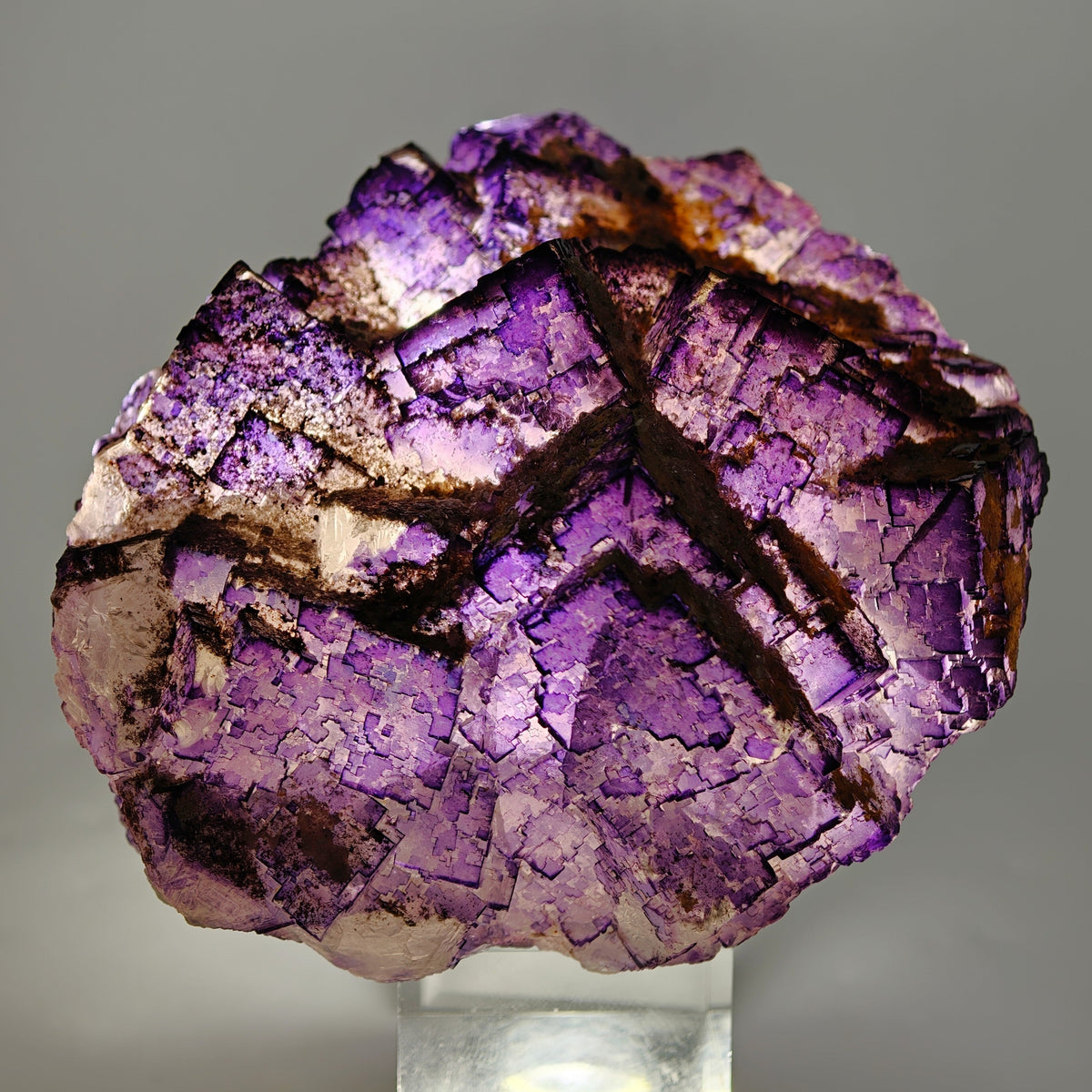
Mexico offers deep purple fluorite: cubes from the Esperanza Mine in the Múzquiz district (Coahuila) and octahedra from the Navidad Mine in Durango.
England
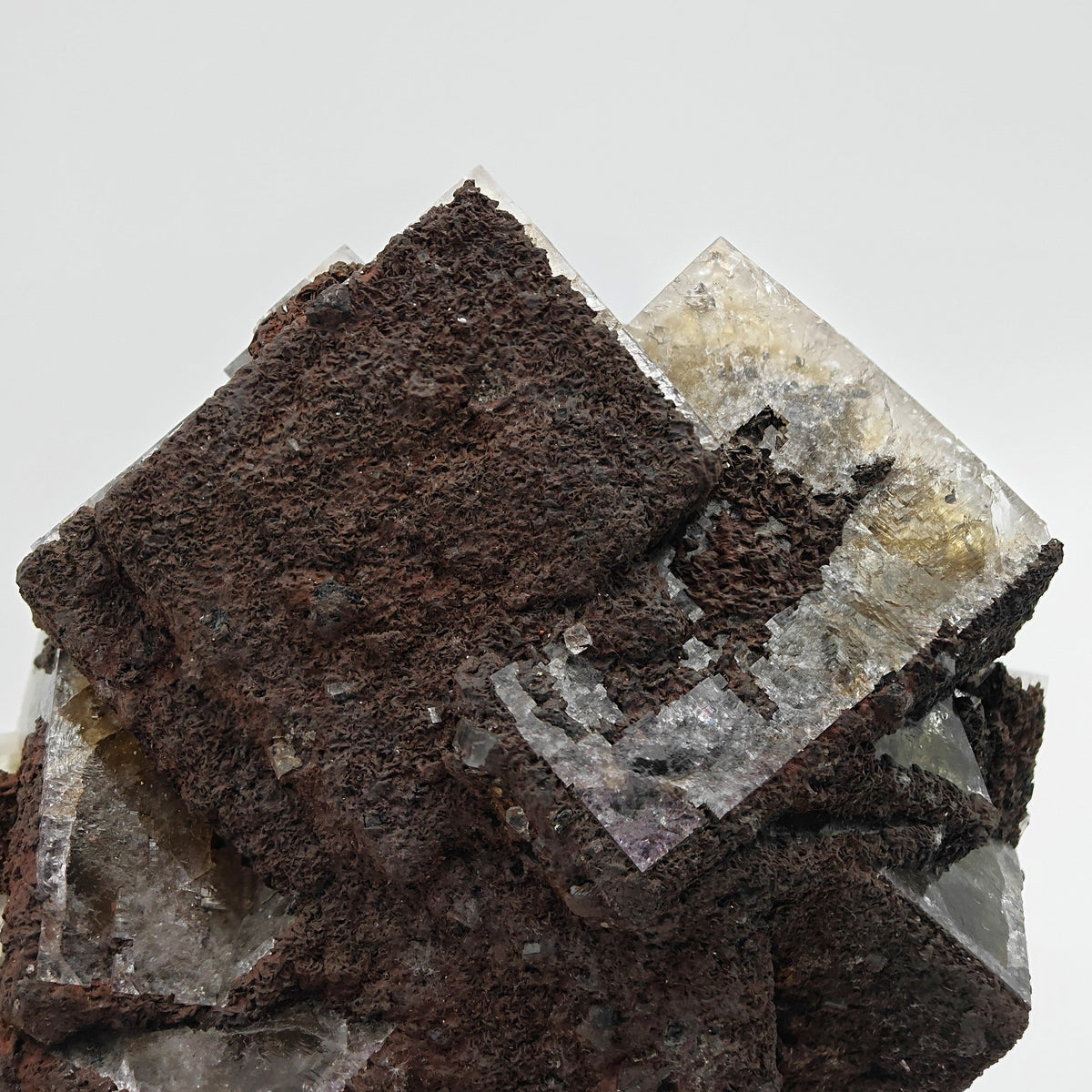
The North Pennines, especially Weardale in County Durham, are a classic area for fluorite collectors. The mines produced green, purple and yellow crystals, often as interpenetrant twins.
Spain and Morocco
Asturias, in northern Spain, is famous for golden yellow cubes, from mines such as Moscona. In Morocco, El Hammam produces yellow and purple fluorite, and Tounfit has given large purple crossed crystals.
United States
The Illinois-Kentucky district and Elmwood (Tennessee) are classic sources, and the Blanchard Mine in New Mexico is known for vivid blue cubes.
Fluorite in Italy
Italy has its own fluorite tradition, and Sardinia is at its centre. The Muscadroxiu-Genna Tres Montis mine at Silius, opened in 1968, was the island's great fluorspar mine; its specimens of fluorite with calcite and baryte are now classics. Other Sardinian localities, such as Monte Argentu near Fluminimaggiore, give purple cubes with white phantoms.
In northern Italy, the Camissinone Mine at Zogno (Bergamo) is known for intense purple cubes, and Curino (Biella) for violet fluorite on smoky quartz.
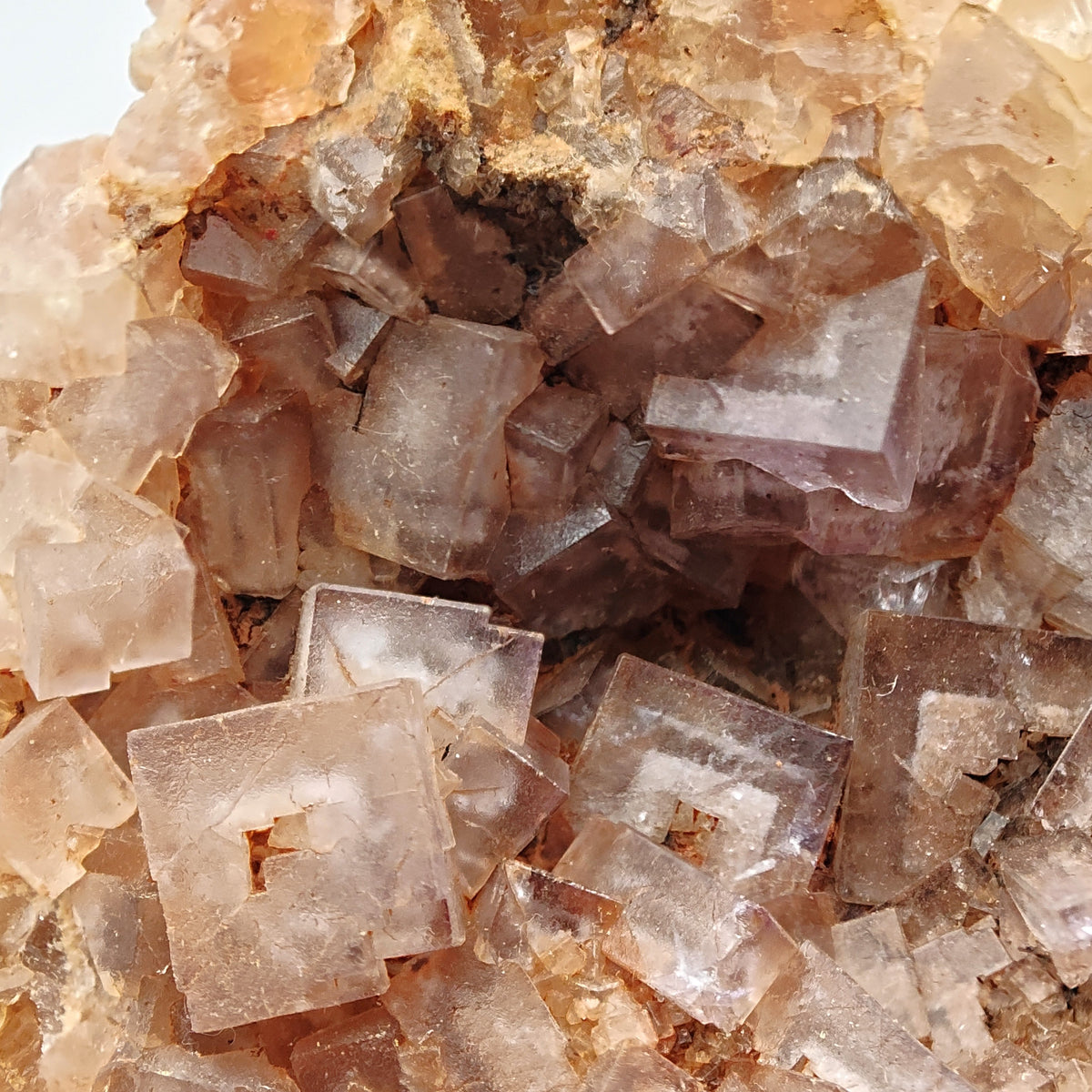
Our current Italian fluorites include a large fluorite and calcite cluster from Silius and purple cubes from Zogno. More are in our minerals from Italy.
How to recognise real fluorite
- Hardness 4: a steel knife scratches fluorite, while fluorite does not scratch glass.
- Cleavage: small triangular cleavage planes at the corners are typical; glass and resin imitations have none.
- Weight: at about 3.18, fluorite feels heavier than quartz of the same size.
- Inclusions: natural pieces show growth zones and phantoms, never round gas bubbles.
- Repairs: under a UV lamp, glue often glows differently from the mineral, so repaired crystals become easier to spot.
Rainbow fluorite sold as polished spheres or towers is real fluorite, but it is cut and shaped. Collector specimens are natural crystals that have not been polished. When in doubt, check our Mineral Glossary.
How much is fluorite worth?
Fluorite is one of the most accessible minerals for a new collector, but top pieces reach museum prices. The value depends on:
- colour, transparency and lustre;
- sharpness of the crystals and absence of damage;
- size and how the crystals sit on the matrix;
- the locality, especially classic or depleted mines;
- associations with other minerals and a strong UV reaction.
Fluorite is the species we stock in the greatest number, so here is a concrete idea of current prices on our site (November 2026):
- From about €40 to €100: small, well-formed pieces such as golden cubes from Asturias or purple cubes from Sardinia.
- From about €100 to €700: cabinet specimens with strong colour from classic localities, such as Navidad octahedra or Hexigten octahedra.
- Thousands of euros: large museum-size pieces, such as our 30 cm crossed fluorite from Tounfit, Morocco.
These ranges are indicative: two pieces of the same size can differ a lot in price because of quality and locality.
What to check before buying fluorite
- Edges and corners: fluorite chips easily, so look for damage in close-up photos.
- A precise locality, ideally down to the mine.
- Photos in daylight, plus a UV photo if fluorescence matters to you.
- Dimensions and weight stated clearly.
- Any repair or treatment declared in the description.
Every specimen we sell has a documented locality, dimensions and weight, and comes with an ITALMINERAL certificate of authenticity. Our Collector's Guide explains sizes and terminology.
How to clean and care for fluorite
- Remove dust with a soft brush or compressed air.
- If needed, rinse in lukewarm water with a drop of mild soap, then let it dry naturally.
- Avoid hot water and sudden temperature changes: fluorite can crack along its cleavage.
- Avoid ultrasonic cleaners and acids, especially when calcite is present.
- Keep it away from long exposure to direct sunlight, which can fade some colours.
- Store it apart from harder minerals such as quartz, which can scratch it.
Fluorite FAQ
Is fluorite rare?
Fluorite as a mineral is common and is mined worldwide for industry. Fine collector specimens are much rarer: sharp, undamaged, well-coloured crystals from classic localities are limited, and many famous mines in China, England and Sardinia are now closed or depleted.
Does all fluorite glow under UV light?
No. Many fluorites glow blue or violet under UV light, but the reaction depends on trace elements and varies from locality to locality and even within one deposit. Some pieces glow strongly, others weakly and some not at all, so it is best to check a UV photo of the specific specimen.
Can fluorite go in water?
Yes, a quick rinse in lukewarm water is safe for fluorite. Avoid hot water and sudden temperature changes, which can crack it along its cleavage, and do not leave it soaking for long if it sits on a fragile or clay-rich matrix. Dry it gently and let it air-dry.
Does fluorite fade in sunlight?
Some fluorites can lose part of their colour after long exposure to direct sunlight, while others are stable. Since it is hard to know in advance, it is wise to display fluorite away from windows and under LED lighting, which gives off very little UV and heat.
Why is it called fluorite?
The name comes from the Latin fluere, "to flow". It was given in 1797 by the Italian mineralogist Carlo Antonio Galeani Napione, because fluorite was used as a flux to help metal ores melt in furnaces. The word "fluorescence" was later derived from fluorite.
Sources: Mindat, Fluorite; UV Minerals, fluorite under UV light; Monumenti Aperti, Muscadroxiu Mine.
Written by ITALMINERAL (Luca Zanon and Luca Agresta), collector-mineral dealers based in Como, Italy, with a background in nuclear engineering. Read our story.
